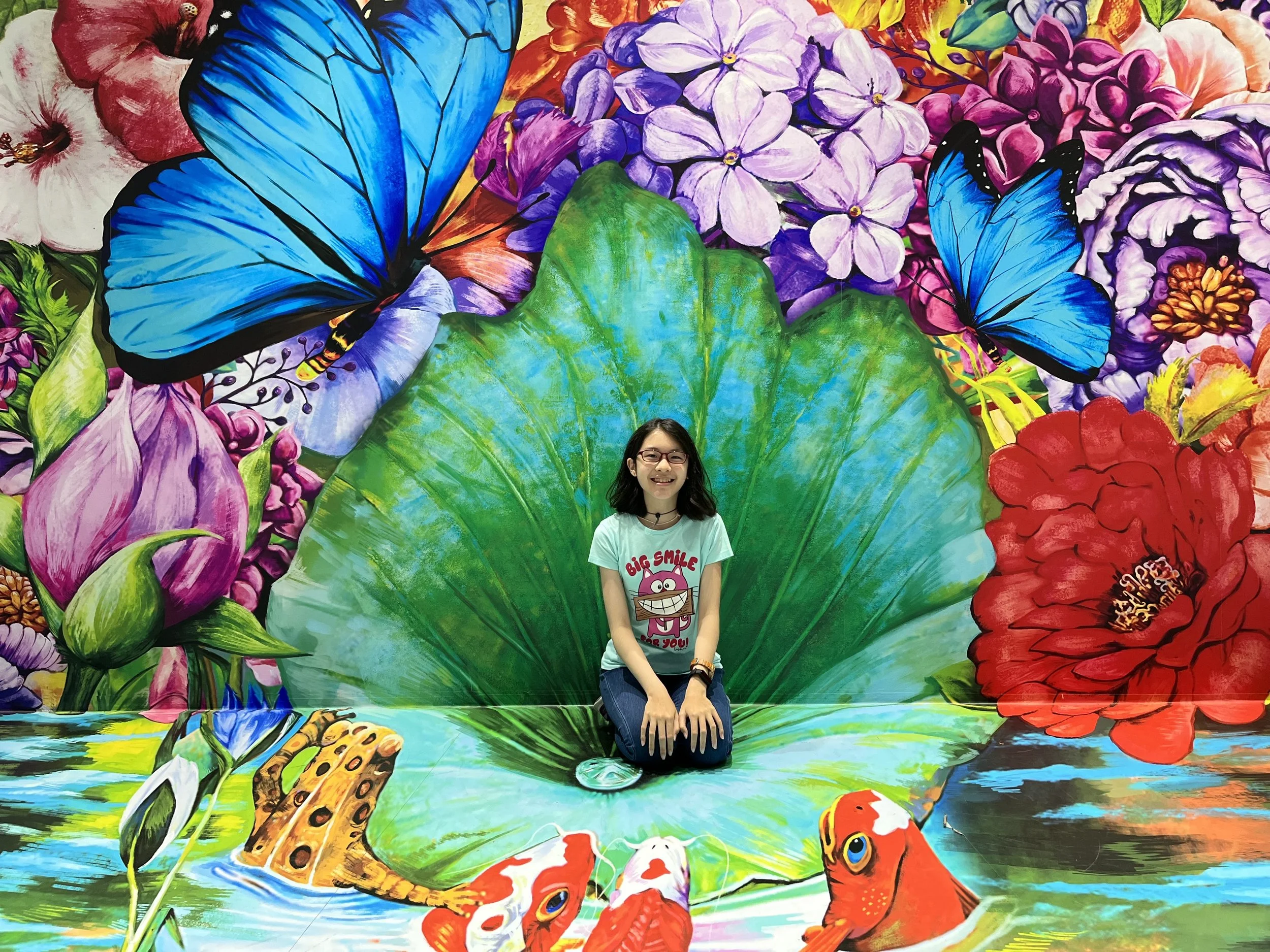
Between Two Worlds
“Day one of becoming Chinese.” “You’ve met me at a very Chinese time of my life.” “I am Chinese.”
A few months ago, opening TikTok meant coming across viral videos of people drinking hot water, wearing indoor slippers, eating congee, and practicing Eastern wellness methods in their quest for “inner steadiness.” Called Chinamaxxing, this trend saw members of Gen Z, often Westerners, proudly demonstrating how they were “becoming Chinese.” For many Asian audiences, this raised a variety of reactions ranging from amusement and pride to skepticism and criticism, as debates emerged over the fine line between cultural appreciation and appropriation.
Yet beyond these surface-level reactions lies a deeper question about what it truly means to belong to a culture. As Filipino citizens of Chinese descent, identity is not something we can simply adopt or perform; it is something we must consciously understand and live out. Are we, too, reduced to the customs, traditions, and habits we choose to integrate into our lives?
Growing up in the Philippines as third- or fourth-generation Chinese, it’s easy to feel as though we are “not Chinese enough.” We face the struggle of being “both,” yet at the same time “neither.” A case in point is how most New Lifers struggle to speak Mandarin and Hokkien but often code-switch in everyday conversation, blending Filipino expressions into fluent English. Meanwhile, much of the traditional Chinese heritage our migrant ancestors carried with them has evolved alongside Filipino traditions, such as mano po, values of kapwa, and even an inherited colonial mentality towards Western culture. As technology drives globalization, Western media, clothing, and pop culture increasingly shape the preferences of younger generations of Chinese-Filipinos, with Confucian values and the use of honorifics like “achi” and “ahia” gradually being lost to time. These shifts in cultural preferences, fueled by Westernization, shape our attitudes towards civic life and manifest in our apathy towards local politics.
Our attitudes toward Filipino society and politics reveal another kind of distance, one that speaks louder of our detachment from our role as Filipino citizens. Many New Lifers are quick to criticize government corruption, public transport infrastructure, and traffic congestion in the Philippines, yet remain largely ignorant of the country’s political, social, and economic landscape. Few can even name at least five incumbent senators of the 20th Congress, while others remain more informed on Western affairs than local news. This prevalent indifference toward politics and civic duties, such as voting, creates an ironic contrast with the active engagement of Chinese-Filipino businessmen in the national economy, where 14 out of 16 Filipino billionaires in Forbes’ 2024 World’s Billionaires List had Chinese heritage. In the context of Philippine politics, our identity often feels incomplete due to the tendency to adopt an isolationist mindset and rationalize civic disengagement when, in reality, we are just as much Filipino citizens as any other Filipino. To understand why this disconnect exists, one must take a look back at its historical roots.
This divide between the Filipinos and Chinese can be traced back to the Spanish colonization period, when the first Chinese migrants arrived in the Philippines due to the Manila-Acapulco galleon trade. The establishment of Binondo in 1594, now known as the “world’s oldest Chinatown,” symbolized both the integration and segregation of the Chinese community in the Philippines. Early Chinese settlers adopted Filipino or Spanish surnames to comply with legal decrees or avoid persecution, reflecting the pressure to assimilate within a society that simultaneously excluded them. Three centuries later, Jose Rizal’s novel Noli Me Tangere featured this racial divide, referring to the Chinese by using the derogatory term “Intsik” and portraying the disposal of Ibarra’s father’s corpse in a river as more preferable to burial with the Chinese. Even today, these historical fractures resurface with issues such as the COVID-19 pandemic and the Alice Guo controversy, where hostilities toward Chinese-Filipinos intensify. In moments of national tension, the conflict between our two cultures comes into focus, prompting us to reevaluate where our loyalties and identities lie.
Caught between two worlds, we as Chinese-Filipinos often struggle to define who we are. But perhaps the answer to our identity confusion lies not in searching for a way to be one or the other, nor in perfectly reconciling both, but in embracing the reality that we are shaped by a uniquely shared and evolving heritage. Our identity as Chinese-Filipinos isn’t a diluted form of being Chinese or Filipino—it’s a distinct culture forged through shared adversity and experiences of migration, adaptation, and life in the Philippines. It is ours to own and ours to embrace. After all, identity doesn’t need to be clear-cut or perfectly defined to be real. In a community where everyone knows everyone, that sense of intimacy and belonging speaks for itself of what it means to be Chinese-Filipino.